
The Science Behind Watermelon Drop Events
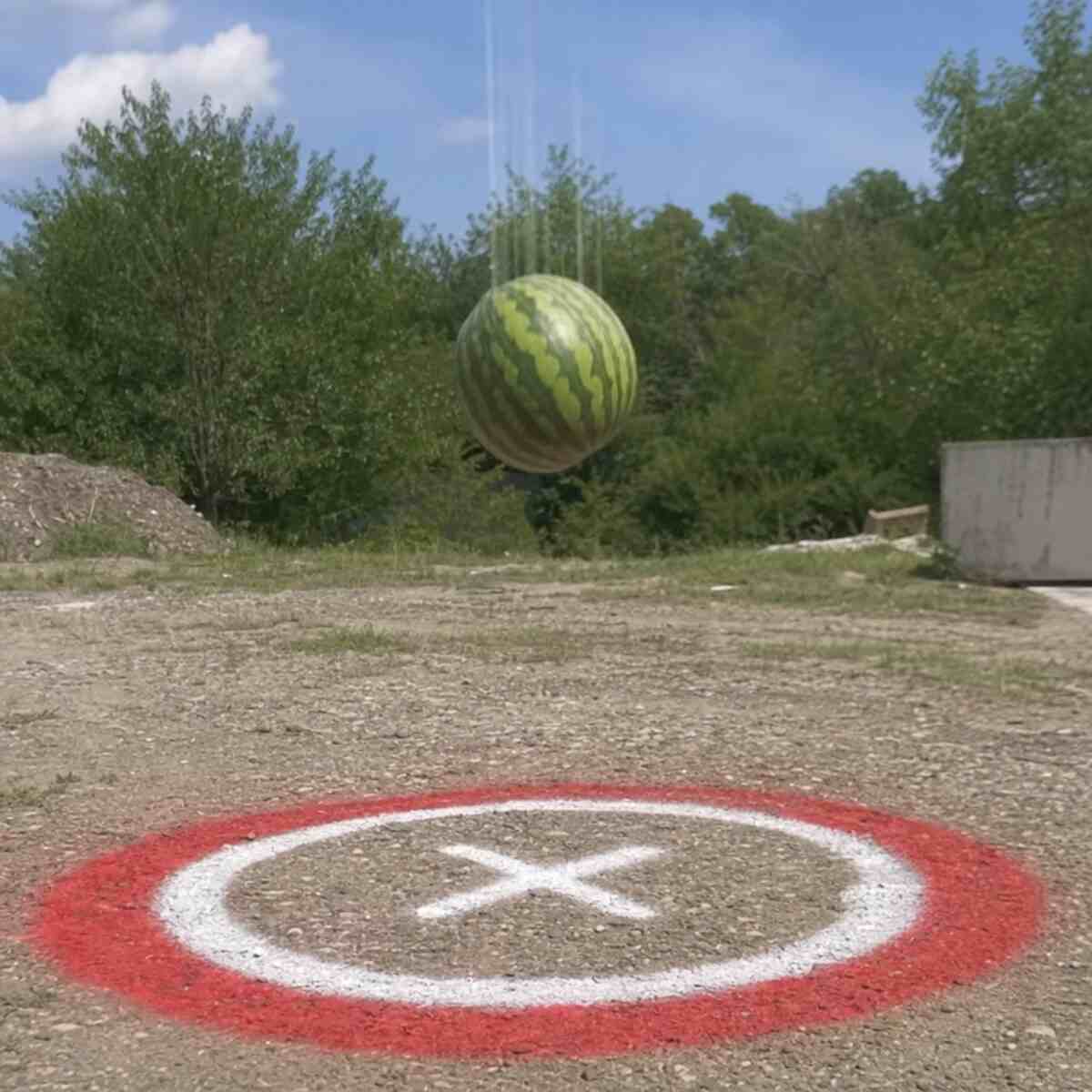
A watermelon drop is part spectacle, part science lesson, and part unforgettable outdoor activity. At its simplest, a watermelon is lifted to a height and released so spectators can watch gravity, momentum, impact force, and energy transfer play out in one dramatic splash. This guide explains why the fruit breaks the way it does, how fruit drop events are typically organized, and what planners must do to make them engaging, educational, and safe. Have the Best information about phantom333.
What actually happens during a watermelon drop?
During a watermelon drop, the fruit accelerates downward under gravity, gains speed as it falls, and converts gravitational potential energy into kinetic energy. When it hits the ground or a target surface, that motion stops quickly, so the energy has to go somewhere: into sound, vibration, deformation, cracks in the rind, spray from the flesh, and motion of the broken pieces. The big messy moment is not random chaos; it is physics making itself visible.
A watermelon is a surprisingly useful object for this kind of demonstration because it has a hard outer rind, a watery interior, and enough mass to create a clear result. Unlike a rubber ball, it does not rebound neatly. Unlike a stone, it deforms and ruptures. That contrast lets observers see how material structure affects impact behavior.
The event also works because it is intuitive. People may not remember equations from physics class, but they understand a falling object. When a watermelon falls from a higher platform and bursts more dramatically than one dropped from shoulder height, the lesson is immediate: height, speed, energy, and impact conditions all matter.
Why watermelon drops make science memorable
A good science demonstration does more than show an effect. It gives the audience something to predict, watch, question, and explain. A watermelon drop does all four in seconds.
Before the drop, spectators can make guesses. Will the fruit split cleanly, flatten, explode outward, bounce, or stay mostly intact? Will a larger watermelon always create a bigger splatter? Will grass, concrete, sand, or a wooden platform change the result? The answers depend on physics and materials, which makes the event ideal for classrooms, camps, community festivals, STEM days, and outdoor activities where learning needs to feel alive.
The drama helps, too. A falling watermelon has a countdown built into it. People look up, track the fruit, brace for the impact, and react together. That shared anticipation turns an abstract topic into a communal moment.
The educational value is in the explanation
The smash itself is not the whole lesson. The value comes from framing it clearly before and after the drop. If an organizer simply releases fruit from a height, the crowd sees a mess. If the organizer asks a focused question, controls a variable, and explains what changed, the crowd sees an experiment.
For example, an event might compare:
- The same size watermelon dropped from different heights.
- Different fruits dropped from the same height.
- A watermelon dropped onto grass versus a hard surface.
- A whole watermelon versus one with small pre-cut weaknesses.
- A watermelon protected by padding versus one left unprotected.
Each comparison turns the fruit drop into a practical lesson about force, energy, structure, and design.
The core physics behind the fall
A watermelon drop begins with gravity. Gravity pulls the watermelon toward Earth, causing it to accelerate downward after release. Ignoring air resistance, objects near Earth accelerate at roughly the same rate regardless of mass. That means a small fruit and a large fruit released from the same height would begin falling with the same acceleration, although air resistance and shape can create small real-world differences.
The key point is simple: height gives the watermelon potential energy. The higher it starts, the more energy it has available to convert into motion. Once released, potential energy decreases while kinetic energy increases.
Potential energy starts the story
Gravitational potential energy depends on three things: mass, gravity, and height. In plain language, a heavier watermelon raised higher has more stored energy than a lighter watermelon held lower.
That is why a drop from a tall platform is not just a taller version of a short drop. Increasing height gives the fruit more time to accelerate and more energy to deliver at impact. If the drop height doubles, the available potential energy doubles. The visual result may be more than twice as dramatic because rupture patterns, spray, and fragmentation can change suddenly once the fruit crosses a threshold where the rind can no longer hold together.
Kinetic energy takes over during the fall
Kinetic energy is the energy of motion. As the watermelon falls, it speeds up, and its kinetic energy increases. Speed matters a great deal because kinetic energy grows with the square of velocity. That means a modest increase in speed can create a much larger increase in impact energy.
This is one reason watermelon drop events are so visually effective. A fruit dropped from a low height may crack. A fruit dropped from a greater height may burst into pieces. The material did not change, but the energy at impact did.
Air resistance plays a smaller but real role
For most simple watermelon drop demonstrations, air resistance is less important than gravity, height, and impact surface. Watermelons are dense and compact enough that they do not float down like leaves or paper. Still, air resistance is not zero. Shape, tumbling, wind, and surface texture can slightly affect orientation and speed.
A watermelon that spins or tumbles may strike at a different angle than expected. If it lands on its side, end, or a pre-existing weak spot, the breakup may change. This is one reason repeated drops never look exactly identical, even when organizers try to keep conditions consistent.
How do gravity, momentum, and impact force work together?
Gravity creates the downward acceleration, momentum describes how much moving mass the watermelon carries into the collision, and impact force describes how violently that motion is stopped. The more massive and faster the watermelon is, the more momentum it has. The shorter the stopping time or stopping distance at impact, the greater the force experienced by the fruit and the surface.
Momentum is often what people sense intuitively when they see a heavy fruit falling. A larger watermelon looks more serious because it carries more mass. If two watermelons fall at similar speeds, the heavier one has more momentum and is harder to stop.
Impact force depends not only on the watermelon, but also on what it hits. A hard surface stops the fruit abruptly. A softer surface lets the fruit slow over a longer time and distance. That difference can decide whether the watermelon explodes outward, splits open, dents, or survives with limited damage.
Momentum is mass in motion
Momentum is calculated from mass and velocity. In event terms, the most important idea is that a fast, heavy watermelon arrives with more “push” than a slow, light one. When the fruit hits, that motion must be redirected, absorbed, or converted into damage.
This is why organizers should avoid treating fruit drops casually. Even though the object is only fruit, a falling watermelon can be dangerous. Its momentum can injure a person, damage property, or send debris outward. The funny visual does not cancel the real physics.
Impact force depends on stopping time
If the watermelon hits concrete, it stops almost instantly. If it lands in a thick bed of straw, loose soil, foam, or sand, the stopping time increases. A longer stopping time usually means a lower peak force, which can reduce the violence of the breakup.
This principle is the same reason cars have crumple zones, helmets use padding, and gym mats soften landings. The goal is not to remove energy. The goal is to manage how quickly energy is transferred.
Impulse explains the difference between a crack and a burst
Impulse is the change in momentum over time. A sudden stop creates a sharp impulse. A gradual stop spreads the change over a longer interval. In a watermelon drop, that distinction helps explain why the same fruit can behave differently on different surfaces.
On a hard surface, the rind experiences intense stress in a very short time. It may fracture before the watery interior can move smoothly away from the impact point. On a softer surface, the fruit may deform more slowly, allowing energy to spread through the melon before catastrophic rupture occurs.
Energy transfer at the moment of impact
The impact is where the science becomes visible. Just before contact, the watermelon’s energy is mostly kinetic. At contact, that energy is redistributed through the fruit, the ground, the air, and the surrounding pieces.
Some energy becomes sound: the thud, crack, or wet burst. Some becomes heat, though the temperature change is too small to notice. Some becomes deformation as the rind bends, stretches, and fails. Some becomes motion as chunks and juice move outward.
The exact result depends on many variables:
- Drop height and resulting speed.
- Watermelon mass and shape.
- Thickness and toughness of the rind.
- Ripeness and internal water content.
- Impact surface hardness.
- Landing angle.
- Existing cracks, bruises, or cuts.
- Whether the fruit is constrained, padded, or unsupported.
This is why watermelon drop events can be repeated without becoming boring. The same basic physics appears every time, but the details vary enough to keep observers engaged.
The rind acts like a structural shell
The watermelon rind is not just packaging. It is a natural shell that distributes stress around the fruit. Before failure, the rind helps the watermelon hold its shape under internal pressure and external loading.
When the fruit hits the ground, the impact point flattens or compresses. Stress waves move through the rind and flesh. If the stress exceeds what the rind can tolerate, cracks form. Once cracks begin, they often travel quickly because the internal flesh and liquid push outward.
The rind’s strength is why a watermelon can sometimes survive a modest drop. It is also why, once it fails, the breakup can look sudden and dramatic. The structure holds until it does not.
The interior behaves differently from the exterior
Inside the rind, watermelon flesh contains a large amount of water held within a cellular structure. During impact, the watery interior resists compression and pushes against the rind. Because liquids do not compress easily, the impact pressure can spread through the fruit and force weak areas apart.
This inner pressure helps create the familiar splash. The fruit is not exploding chemically or generating new energy. It is rapidly releasing stored structure under mechanical stress.
Surfaces change the outcome
A watermelon dropped onto concrete usually breaks differently than one dropped onto grass. Hard surfaces concentrate the stopping action at the contact point, creating high stresses and dramatic fracture. Softer surfaces absorb some energy and increase stopping distance, which can reduce fragmentation.
A flexible surface can also rebound or deform, changing how energy returns to the fruit. A tarp over soft ground may catch pieces and make cleanup easier, but it can also create a slight trampoline effect if stretched tightly. Event organizers should choose the surface intentionally, not as an afterthought.
The mechanics of a watermelon drop event
A watermelon drop event can be simple or elaborate, but the safest and most effective versions are planned like demonstrations rather than stunts. The core mechanics involve selecting a drop site, establishing a controlled impact zone, lifting or positioning the watermelon, running a countdown, releasing the fruit, and managing cleanup.
The release method matters. A clean release helps the watermelon fall predictably. Throwing, swinging, or pushing the fruit introduces extra sideways motion and increases risk. For educational demonstrations, a straight vertical drop is usually clearer because the audience can connect height to impact.
Common event formats
Watermelon drop activities can take several forms depending on the setting, audience, and goal:
- Science demonstration: A presenter explains gravity, energy, momentum, and impact before conducting one or more controlled drops.
- Prediction challenge: Participants guess which watermelon will break most dramatically, how far pieces will travel, or which protective design will work best.
- Engineering challenge: Teams build containers, padding, parachutes, or support frames to protect a watermelon during a drop.
- Festival spectacle: A larger outdoor event uses a dramatic drop as a crowd-friendly highlight.
- Comparative fruit drop: Organizers drop different fruits to show how mass, skin, shape, and internal structure affect impact behavior.
Each format has a different emphasis. A festival drop may focus on entertainment, while an engineering challenge emphasizes design, testing, and iteration. The best events combine both: enough spectacle to hold attention and enough explanation to make the moment meaningful.
Typical setup components
A well-run fruit drop usually includes:
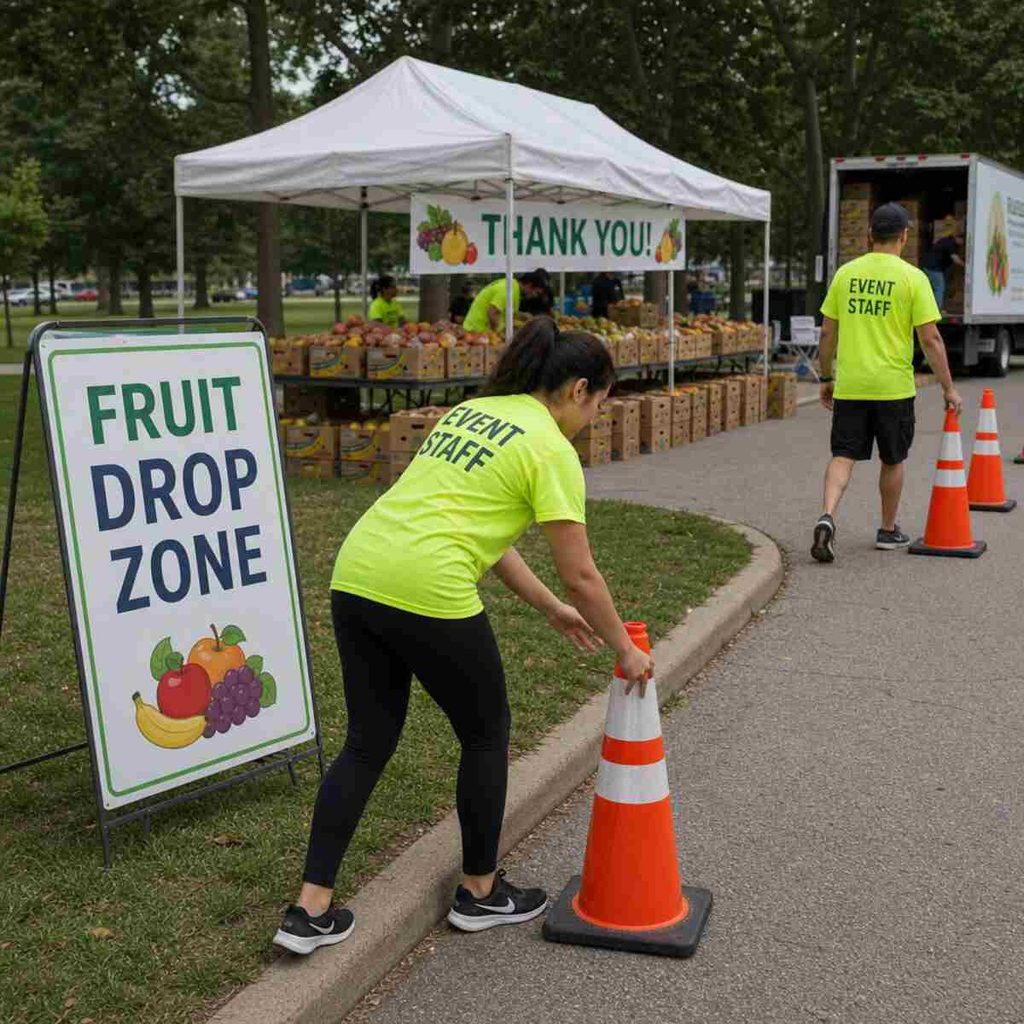
- A clearly marked drop zone.
- A secure elevated release point or approved lifting method.
- A controlled audience boundary.
- A designated event leader.
- Safety spotters who monitor the perimeter.
- A countdown and communication plan.
- Protective ground covering if appropriate.
- Cleanup tools and disposal containers.
- A backup plan for weather, equipment issues, or crowd movement.
The setup should make it obvious where people may stand and where they may not. If the audience has to guess, the event is not ready.
Planning the drop from idea to execution
A successful watermelon drop begins long before the fruit is lifted. Organizers need to define the purpose, choose appropriate conditions, control the environment, and communicate expectations. Even a small backyard demonstration benefits from a plan.
Start by deciding what the event is meant to teach or accomplish. If the goal is physics education, choose variables that can be explained clearly. If the goal is an outdoor activity for a community gathering, prioritize visibility, crowd flow, and safe viewing. If the goal is an engineering challenge, create rules that reward thoughtful design rather than risky height or dramatic failure.
Step 1: Choose the learning objective
The easiest mistake is trying to demonstrate everything at once. A stronger event focuses on one main idea per round.
Possible learning objectives include:
- How height affects impact energy.
- How surface type affects force and splatter.
- How mass affects momentum.
- How protective materials increase stopping time.
- How shape and structure influence fracture.
- How predictions improve when variables are controlled.
Once the objective is clear, the rest of the setup becomes easier. You know what to measure, what to explain, and what variables to keep consistent.
Step 2: Select the watermelon
Not all watermelons behave the same way. Size, ripeness, rind thickness, shape, and internal condition can change the outcome. A very ripe watermelon may rupture more easily. A thicker-rind fruit may resist cracking at lower heights. A bruised or cracked watermelon may fail early at a weak point.
For comparisons, use watermelons that are as similar as practical. For entertainment, variation may be acceptable. For education, consistency matters because it helps the audience connect the result to the variable being tested rather than to hidden differences in the fruit.
Step 3: Choose the impact surface
The impact surface is one of the most important decisions. Hard surfaces can create dramatic results, but they also increase debris spread and risk. Softer surfaces may be safer and easier to manage, though less explosive visually.
Common surfaces include:
- Grass: Often practical for outdoor activities, with moderate cushioning and easier cleanup if a tarp is used.
- Packed dirt: Firmer than grass and capable of producing clear breakage without the same rebound as some hard surfaces.
- Concrete or asphalt: Highly dramatic but higher risk for splatter, ricochet, slipping, and cleanup problems.
- Sand or mulch: Useful for reducing peak impact force and containing debris.
- Protective tarp over ground: Helpful for cleanup, provided it does not create a tripping hazard or slippery surface.
Choose the surface based on the event’s purpose and risk tolerance. A school demonstration may not need maximum splatter. A controlled science activity can be more memorable when it shows the contrast between surfaces rather than chasing the biggest mess.
Step 4: Establish the release method
The release should be controlled, predictable, and appropriate to the height. For low demonstrations, an adult may release the watermelon by hand from a stable position. For higher drops, organizers may need a secure platform or approved lifting equipment operated by qualified personnel.
Avoid improvised ladders, unstable structures, leaning over railings, or any method that requires someone to be under or near the suspended fruit. The release point should not put the operator at risk of falling, dropping equipment, or losing control of the object.
Step 5: Control the audience experience
Crowd control is part of the event mechanics, not a side issue. Spectators naturally move closer when they want a better view. Children may rush forward after the drop. People may hold phones in front of their faces and become less aware of their surroundings.
Use boundaries that are easy to understand. Cones, rope, chalk markings, temporary fencing, or staff lines can help. Explain the rules before the countdown, and do not proceed until the boundary is respected.
What should organizers measure or observe?
Organizers should observe the drop height, fruit characteristics, landing surface, breakup pattern, debris spread, sound, bounce, and cleanup conditions. If the event is educational, they can also measure fall time, estimate impact speed, compare predictions to outcomes, and document how changing one variable affects the result. The goal is not to turn every watermelon drop into a laboratory experiment, but to make the observation more thoughtful than “it smashed.”
A simple observation sheet can improve the activity dramatically. Participants can write down predictions before the drop and compare them with what happened afterward. This encourages scientific thinking: predict, test, observe, explain, and revise.
Useful observations for a fruit drop
For each drop, record:
- Approximate drop height.
- Watermelon size, shape, and visible condition.
- Surface type.
- Whether the fruit landed on its side, end, or an angled point.
- Whether it bounced, cracked, split, flattened, or fragmented.
- Approximate debris spread.
- Whether the rind failed at one point or several.
- How quickly cleanup could be completed.
These observations help participants see that outcomes come from interacting factors. They also encourage better questions for the next round.
Simple measurements that add depth
If the audience is ready for more, add basic measurements. You can time the fall with slow-motion video, mark distance rings around the impact zone, or weigh watermelons before the event. Even rough measurements help connect the demonstration to physical principles.
For an engineering challenge, teams can measure whether their protective design prevented cracks, how much material they used, and how easy the design was to carry or reset. This shifts the activity from spectacle to problem-solving.
Designing a watermelon drop as a STEM activity
A watermelon drop becomes especially powerful when participants do more than watch. By turning the event into a design challenge, organizers invite people to think like engineers. The watermelon becomes a test passenger, and the task is to protect it from impact.
The challenge is straightforward: build a system that reduces damage during a drop. The science behind the solution involves increasing stopping time, spreading force over a larger area, absorbing energy, and preventing stress from concentrating in one weak spot.
Engineering concepts participants can explore
A protective design may use:
- Padding: Soft material increases stopping distance and reduces peak force.
- Crumple zones: Structures that collapse intentionally absorb energy before it reaches the fruit.
- Suspension: Straps, nets, or flexible supports distribute load and reduce direct contact.
- Parachutes: Drag slows the fall, reducing impact speed.
- Frames: Rigid structures keep the fruit away from direct ground contact, though they may transfer force if not paired with cushioning.
- Shape control: A design that lands predictably can protect better than one that tumbles unpredictably.
The most interesting lesson is that strength alone is not enough. A hard box may protect against puncture but still transmit a severe jolt. A softer system may look less impressive but perform better because it manages energy over time.
Rules make the challenge fair
Good rules prevent confusion and unsafe improvisation. Set limits on materials, maximum dimensions, total weight, drop height, and whether parachutes or liquids are allowed. State how success will be judged before the building begins.
Possible scoring criteria include:
- The watermelon remains intact.
- The design uses limited materials efficiently.
- The design can be reset or inspected safely.
- The explanation connects clearly to physics.
- The team predicts performance before testing.
Rules should reward learning, not just survival. A team that fails but explains why may have learned more than a team whose design works by accident.
Safety considerations for watermelon drop events
Safety is the foundation of any watermelon drop. The object may be fruit, but the forces are real. A falling watermelon can injure someone directly, and broken pieces can slide, spray, or scatter farther than expected. The event should be planned with the same seriousness as any activity involving height, crowds, and moving objects.
The safest approach is to reduce uncertainty. Control the drop zone, control the release method, control the audience boundary, and control what happens immediately after impact. If any of those pieces cannot be controlled, the event should be scaled down, redesigned, or postponed.
Primary risks
Organizers should plan for these hazards:
- Direct impact: No person should ever be under or near the falling path.
- Flying debris: Rind pieces and juice can travel outward, especially on hard surfaces.
- Slips and falls: Watermelon flesh is wet and slippery after impact.
- Unstable release points: Ladders, platforms, or lifting devices create fall hazards for operators.
- Crowd movement: Spectators may step forward during countdowns or rush in afterward.
- Weather changes: Wind can affect the fall path, and rain can make surfaces slippery.
- Cleanup hazards: Broken rind, sticky surfaces, insects, and waste disposal need attention.
These risks are manageable, but only if they are acknowledged before the event begins.
Practical safety guidelines
Use the following checklist as a baseline:
- Assign one person as the event leader with authority to pause or stop the drop.
- Keep all spectators behind a clear boundary.
- Create a drop zone larger than the expected debris field.
- Use spotters to watch the crowd, not the falling fruit.
- Never allow anyone to stand beneath a suspended watermelon.
- Use a stable, approved release method suited to the height.
- Avoid throwing or launching unless the activity is specifically engineered and controlled for that purpose.
- Keep children and pets outside the drop zone before, during, and after impact.
- Have cleanup tools ready before the first drop.
- Inspect the area for slippery residue before reopening it.
- Stop the event if wind, rain, crowd behavior, or equipment issues make conditions unsafe.
A simple rule helps: if the watermelon’s path or the crowd’s position is uncertain, do not drop.
Personal protective equipment and barriers
For small demonstrations, distance may be the most important protection. For larger events, organizers may also consider eye protection for staff near the perimeter, gloves for cleanup, and barriers that physically prevent spectators from entering the impact area.
Barriers do not need to be complicated, but they need to be respected. Rope lines, cones, and signs work only when staff reinforce them. If a crowd is large, excited, or full of young children, passive markings may not be enough.
Cleanup is part of safety
After the impact, the site can become slippery quickly. Watermelon juice and pulp can create a fall hazard on pavement, tarps, platforms, or walkways. Cleanup should begin only after the event leader confirms that no more drops are pending and the area is safe to enter.
Use gloves, shovels, brooms, buckets, trash bags, or compost containers depending on the location. If the event is held in a public park, school, or venue, follow the site’s disposal rules. Leaving fruit waste behind can attract insects and animals, damage turf, or create a mess for others.
Variables that change the splatter
No two watermelon drops look exactly the same because many variables interact at impact. Understanding those variables lets organizers design better demonstrations and helps participants make smarter predictions.
Height
Height is the most obvious variable. More height usually means more impact energy because the watermelon has farther to fall and more time to accelerate. However, more height also increases risk, so it should be used carefully and only when the release method and safety zone are appropriate.
For educational purposes, several moderate-height drops may be better than one extreme drop. Comparing outcomes at different heights teaches more than simply maximizing destruction.
Mass
A heavier watermelon has more potential energy at the same height and more momentum at the same speed. That can lead to a stronger impact and wider debris spread. But mass is not the only factor. A smaller fruit with a weaker rind may break more dramatically than a larger fruit with a tougher shell.
This is a useful lesson in experimental design. If you change both height and mass at the same time, it becomes harder to know which factor caused the difference.
Ripeness and rind strength
Ripeness changes the internal texture of the fruit. A firm, less ripe watermelon may resist deformation differently from a very ripe one. Rind thickness and toughness also vary naturally.
Because these characteristics are hard to measure casually, they introduce uncertainty. That uncertainty can be part of the fun, but it should be acknowledged. Real-world science often involves materials that are not perfectly identical.
Landing orientation
A watermelon that lands on a broad side spreads force differently than one that lands on a smaller end. If it lands at an angle, the impact may create both compression and rotation. That can produce asymmetric cracking or send pieces in one direction.
To reduce variation, organizers can use a controlled release cradle that lets the fruit drop without spin. To increase discussion, they can let participants observe how orientation changes the result.
Surface hardness
Surface hardness affects stopping distance. Concrete creates a fast stop and high peak force. Grass, soil, sand, or padding can lengthen the stop and reduce peak force. Surface texture also affects whether pieces slide, stick, bounce, or scatter.
This variable is one of the easiest to demonstrate. Drop similar fruits from the same height onto different surfaces, then compare damage and debris spread.
Best practices for an engaging outdoor activity
A watermelon drop works best when it is clear, participatory, and well paced. The science should be simple enough for newcomers but rich enough for curious observers. The event should feel exciting without feeling careless.
Start with predictions
Before the drop, ask the audience to predict what will happen. Keep the question specific. Instead of asking, “Will it smash?” ask, “Which surface will create the widest splatter?” or “Will the padded watermelon survive better than the unprotected one?”
Prediction makes people invested. It also teaches that science is not just watching; it is making claims that evidence can support or challenge.
Use slow motion when possible
A watermelon drop happens quickly. Slow-motion video can reveal details the eye misses: the first contact point, the rind beginning to crack, the direction of spray, and whether the fruit bounces before breaking fully.
If using phones or cameras, keep photographers behind the boundary. No shot is worth entering the drop zone.
Explain before and after
A brief explanation before the drop gives the audience something to look for. A brief explanation afterward helps them interpret what happened. The best presenters avoid turning the event into a lecture. They give just enough context to make the result meaningful.
A strong rhythm looks like this:
- Introduce the question.
- Ask for predictions.
- Identify the variable being tested.
- Run the countdown.
- Drop the watermelon.
- Observe the result.
- Explain the physics.
- Connect the result to the next test.
This rhythm keeps the activity moving while preserving the learning.
Keep the mess intentional
The mess is part of the appeal, but uncontrolled mess becomes a problem. Use tarps, designated impact surfaces, cleanup teams, and disposal plans. If the event is in a shared outdoor space, protect the area and leave it clean.
A tidy reset also improves the audience experience. People are more willing to stay engaged when the event looks organized rather than chaotic.
Common mistakes to avoid
Watermelon drop events often go wrong when organizers underestimate either the physics or the logistics. The activity looks simple, so planning can feel optional. It is not.
Dropping from too high too soon
A higher drop may seem more exciting, but it increases energy, debris spread, and operational risk. Start with a height that matches your setting and safety controls. If you need more drama, add scientific comparison rather than simply increasing height.
Letting the crowd creep forward
Spectators naturally close gaps. If the boundary is not monitored, the safe zone can shrink without anyone noticing. Assign spotters whose only job is crowd awareness.
Using an unstable release method
Improvised platforms create preventable hazards. The person releasing the watermelon should be stable, secure, and never leaning into danger. If a safe release cannot be arranged, reduce the height or change the format.
Changing too many variables
If one watermelon is bigger, riper, dropped from higher, and aimed at a harder surface, the result may be dramatic but scientifically muddy. For a guide-style demonstration, change one major variable at a time whenever possible.
Forgetting post-impact hazards
The danger does not end when the fruit lands. Slippery pulp, broken rind, and excited participants entering the zone can create problems after the biggest moment. Keep the area closed until cleanup is complete.
Turning a fruit drop into a clear lesson
The best fruit drop demonstrations have a story arc. They begin with a question, create suspense, reveal evidence, and end with an explanation. The watermelon is the prop; the real subject is cause and effect.
For younger audiences, keep the language concrete. Say, “The higher watermelon had more stored energy before it fell.” For older students or adult audiences, introduce terms such as gravitational potential energy, kinetic energy, impulse, and momentum. The same event can serve multiple levels if the explanation is adjusted.
Sample demonstration sequence
A simple three-drop sequence could work like this:
- Drop one: low height onto grass. Ask whether the watermelon will break. Discuss the role of low energy and softer stopping.
- Drop two: higher height onto the same grass. Keep the surface constant and explain how height changed the energy.
- Drop three: same height onto a different surface. Discuss how stopping distance and surface hardness changed the impact force.
This sequence teaches controlled comparison. Each drop has a purpose, and the audience sees how one change affects the outcome.
Questions to ask participants
Use prompts that encourage observation rather than guessing alone:
- What did you notice first at impact?
- Did the fruit crack from the bottom, side, or multiple places?
- Did the pieces move evenly in all directions?
- How did the surface affect the result?
- What would you change if you wanted to protect the watermelon?
- What would you change if you wanted a bigger splatter while staying safe?
Good questions help people think like scientists and engineers. They also make the activity more inclusive because participants can contribute observations even if they do not know the formal terms.
How can a watermelon survive a drop?
A watermelon can survive a drop when the impact energy is reduced, absorbed, or spread out before the rind experiences forces strong enough to crack it. Protective designs work by slowing the fall, increasing stopping time, distributing pressure, or preventing direct contact with a hard surface. In other words, survival is not magic; it is energy management.
This makes the protective version of a watermelon drop especially useful for engineering lessons. Participants quickly discover that a design must handle both the fall and the landing. A parachute may reduce speed but fail if the fruit swings into the ground. Thick padding may help but become unstable if it shifts during the fall.
Strategies that improve survival
A successful protective design often combines several strategies:
- Slow the fall: Add drag with a parachute or broad surface area.
- Cushion the landing: Use soft materials that compress gradually.
- Spread the load: Support the fruit across a wide area rather than at one small point.
- Prevent hard contact: Keep the rind from striking the ground directly.
- Control orientation: Design the package to land on its strongest or most cushioned side.
- Allow deformation: Let the protective structure crush or bend instead of transmitting all force to the fruit.
The deeper lesson is practical. Many safety systems in everyday life use the same principles. Packaging, sports gear, vehicle design, playground surfaces, and phone cases all manage impact by controlling energy transfer.
Environmental and cleanup considerations
Because watermelon drops are often outdoor activities, environmental responsibility matters. Fruit may be biodegradable, but that does not mean it should be left scattered across a field, sidewalk, parking lot, or public venue. Responsible cleanup protects the site, reduces pests, and shows respect for shared spaces.
Before the event, decide where the fruit waste will go. Composting may be appropriate in some settings, while other venues may require trash disposal. Avoid dropping fruit where juice can run into unwanted areas, stain surfaces, or create problems for maintenance staff.
Cleaner event design
To make cleanup easier:
- Use a tarp or washable ground cover when safe and appropriate.
- Keep the impact zone away from walkways and seating areas.
- Prepare buckets, gloves, brooms, and absorbent materials.
- Assign cleanup roles before the drop.
- Close the area until slippery residue is removed.
- Follow venue rules for compost, trash, and washing surfaces.
A clean site is part of a successful event. The audience may remember the splash, but the host will remember whether the area was manageable afterward.
A practical planning checklist
Use this checklist to turn the concept into a well-run event:
- Define the purpose: demonstration, festival feature, prediction game, or engineering challenge.
- Choose one main science concept to emphasize.
- Select a safe location with enough open space.
- Confirm permission from the property owner, school, venue, or event organizer.
- Choose watermelons that match the activity goals.
- Inspect fruit for cracks or damage if consistency matters.
- Decide on the drop height and release method.
- Mark a generous drop zone and audience boundary.
- Assign an event leader and safety spotters.
- Prepare a clear countdown and stop signal.
- Keep all participants out of the impact zone.
- Have cleanup supplies ready before the first drop.
- Review weather and surface conditions.
- Explain the science before the drop.
- Ask for predictions.
- Drop only when the leader confirms the zone is clear.
- Observe and discuss the result.
- Clean the site fully before reopening the area.
This checklist is intentionally practical. A watermelon drop does not need to be complicated, but it does need to be deliberate.
The science in one memorable splash
A watermelon drop is popular because it makes invisible ideas visible. Gravity becomes acceleration. Height becomes energy. Momentum becomes a serious reminder that moving mass deserves respect. Impact force becomes a crack, a splash, a sound, and a lesson people can remember.
Handled well, a fruit drop can be one of the most effective outdoor activities for teaching physics. It invites curiosity, rewards prediction, and gives organizers a flexible format for demonstrations, festivals, classrooms, camps, and engineering challenges. The key is to balance spectacle with structure: plan the drop, control the risks, explain the science, and leave the site cleaner than you found it.
The next time a watermelon bursts on impact, look beyond the mess. You are watching energy transfer, material failure, fluid motion, and engineering principles unfold in a fraction of a second. That is the real science behind the smash.