


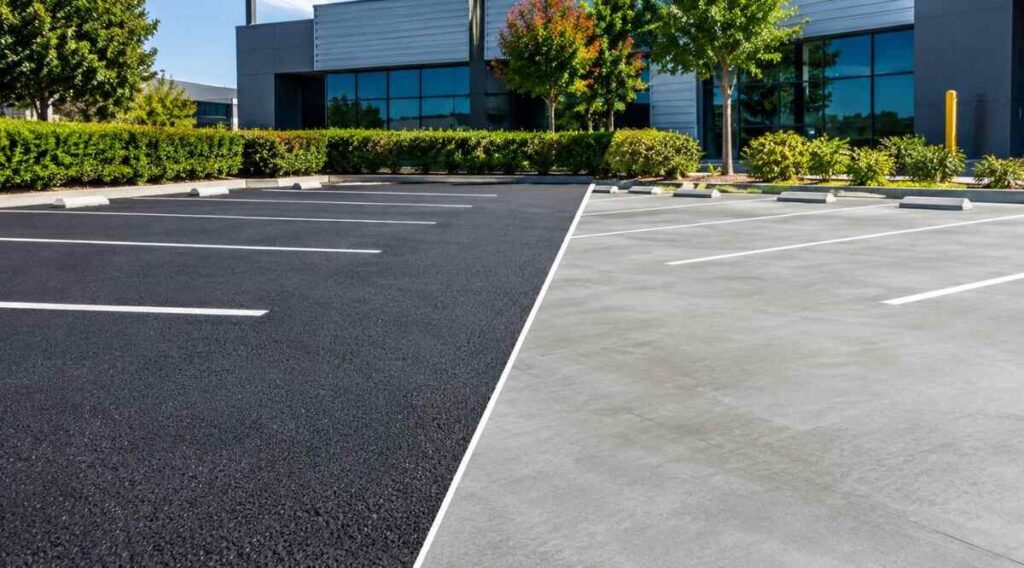
Quick Answer: Neither material always lasts longer. Well-built concrete usually has a longer service life and suits heavy, slow or standing loads such as loading bays and bin areas. Asphalt costs less upfront, is laid faster and is easier to repair, which suits large areas of aisles and bays. In Melbourne, many commercial sites perform best with both: concrete in high-stress zones and asphalt elsewhere. In every case, the base, drainage and maintenance decide the real lifespan.
Which surface lasts longer? The honest answer starts with a second question: what will the car park actually carry? This guide compares asphalt and concrete on lifespan, heat, heavy loads, repairs and compliance, so you can brief a contractor with confidence.
“Lasts Longer” Depends on Four Things
Design life is a result, not a material property. Four factors decide it:
- Traffic: The number and weight of heavy vehicles, and how often they turn or stand, matter more than the count of cars.
- Subgrade: Reactive clay is common across parts of Melbourne, including areas of the north and west. It swells and shrinks with moisture, and it moves whatever sits on it.
- Drainage: Water that stays on or under a pavement weakens the base and shortens its life.
- Maintenance: Sealing, crack repair and joint care stop small defects from becoming reconstruction.
Austroads’ Guide to Pavement Technology Part 2 covers design methods for both flexible pavements (granular and asphalt) and rigid concrete pavements, and includes guidance on economic comparisons between alternative designs. That is the right frame for the decision: compare whole-of-life performance, not just the quote.
Asphalt Car Parks: Strengths and Limits

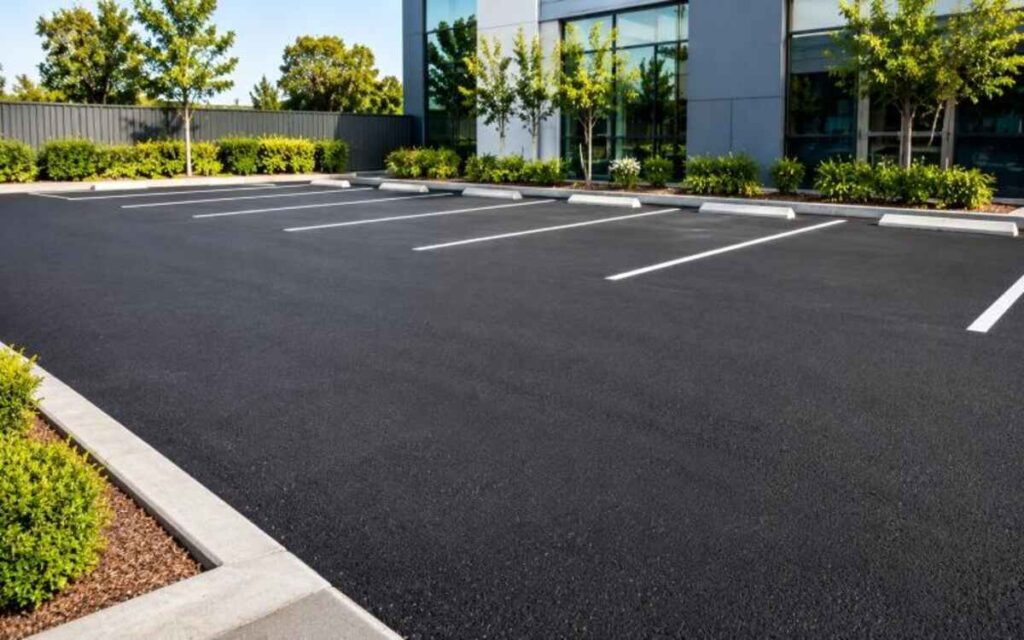
Strengths
- Usually lower upfront cost, especially over large areas
- Fast to lay, and it returns to traffic sooner, which limits downtime for a trading site
- Flexible, so it tolerates minor ground movement better than a rigid slab
- Easy to patch, overlay, resurface and re-mark
Limits
- Heat sensitivity: it can soften, rut and take tyre marks under slow, heavy or standing loads
- Fuel and oil spills can soften the binder, so fuelling points and waste areas suit concrete better
- Standard builds typically last 10 to 15 years. Heavy-duty builds can reach 15 to 20 years if the base is well compacted and maintenance is kept up
- Needs periodic resurfacing and crack sealing
Concrete Car Parks: Strengths and Limits

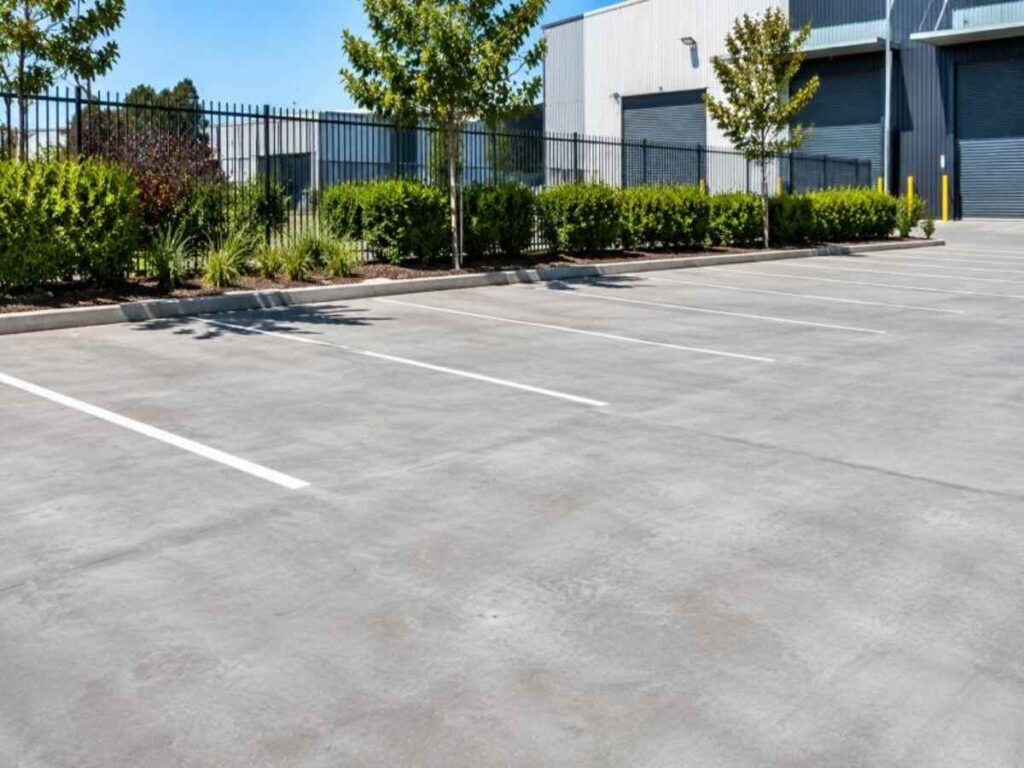
Strengths
- Rigid, so it resists rutting under heavy, slow or turning loads
- Resists fuel and oil better than asphalt
- Often the longer-lasting option when designed and built properly
- Lighter in colour, so it can run cooler than dark asphalt
Limits
- Higher upfront cost for most jobs
- Needs correctly designed and sealed joints, plus a well-prepared base, or it is likely to crack
- Takes longer to cure before it can carry vehicles, which affects staging
- Repairs and utility cuts are more visible and harder to reinstate
Melbourne Conditions That Change the Answer
Heat. The Bureau of Meteorology recorded 45.6 °C at Laverton RAAF on 27 January 2026, the hottest reading across Greater Melbourne sites that summer. Austroads guidance for road pavements puts maximum surface temperature in Melbourne at about 21 °C above hot-day air temperature, so a 40 °C air temperature suggests a surface near 61 °C (a design estimate). That favours concrete, or a heat-appropriate asphalt mix and binder, wherever heavy vehicles stand or turn.
Clay and rainfall. Dry summers and wet winters keep reactive clay moving. A suitable base, good subsoil drainage and properly spaced joints are as important as the surface choice.
Side-by-Side Comparison
| Factor | Asphalt | Concrete |
| Upfront cost | Lower for most areas | Higher for most jobs |
| Typical life | 10 to 15 years standard, 15 to 20 years heavy-duty | Often longer when well built |
| Heavy, slow or standing loads | Good with a thick base, prone to rutting in heat | Strong, resists rutting |
| Hot weather | Can soften and mark | Rigid, does not soften |
| Fuel and oil | Binder can soften | Better resistance |
| Construction time and downtime | Faster, quick return to traffic | Slower, longer cure |
| Repairs | Easy patching and overlays | Visible patches, joint maintenance |
| Best suited to | Aisles, bays, large areas, budget-led jobs | Loading docks, bin areas, bus bays, turning areas |
The Hybrid Approach
Many commercial sites do not need one material across the whole car park. A zone-by-zone design often works best:
- Concrete: Entry and exit crossovers, loading bays, bin and waste collection areas, bus bays and tight turning areas
- Asphalt: Main aisles and standard parking bays, where loads are lighter and faster, cheaper construction matters
This puts the more expensive, longer-lasting material only where stresses are highest, with a properly detailed joint where the two meet. A good car park contractor in Melbourne will propose it rather than defaulting to one product.
Compliance Applies to Both Materials
Victoria’s car parking provisions (Clause 52.06) require spaces, access lanes, and driveways to be treated with an all-weather seal or another durable surface, drained so they can be used as planned, and line-marked. The wording does not prescribe asphalt or concrete. It also calls for car parking to be well lit and clearly signed, and for accessible spaces to be designed to AS/NZS 2890.6. Layout and geometry follow AS/NZS 2890.1.
The surface you choose must therefore maintain line markings, falls, and accessible bay gradients over time. A rutted asphalt bay or a failing concrete joint at an accessible space can undo a compliant design. If you are planning commercial car park construction in Melbourne, ask your contractor how the chosen surface will continue to meet these requirements and how line marking will be maintained.
Five Questions to Ask Before You Choose
- What traffic and loading have you designed for, and where do heavy vehicles stand and turn?
- What geotechnical investigation have you done on the subgrade, and what base do you propose?
- How will the car park drain, and where does stormwater go?
- Which zones would you build in concrete and which in asphalt construction, and why?
- What maintenance does the warranty assume, and what does it cover?
Contractors who handle design, drainage, line marking and staging together reduce handover risk. On civil infrastructure construction Melbourne projects, one team coordinating trades, permits and sequencing keeps program and quality on track.
Frequently Asked Questions
Is asphalt or concrete better for a commercial car park in Melbourne?
It depends on the loads. Asphalt suits large areas with mostly light vehicles, where lower upfront cost and fast construction matter. Concrete suits loading bays, bin areas, bus bays and turning zones. Many sites use both.
Which lasts longer, asphalt or concrete?
Well-built concrete often lasts longer. Standard asphalt typically lasts 10 to 15 years, and heavy-duty builds can reach 15 to 20 years. The base, drainage and maintenance decide the real figure.
Is asphalt a poor choice in Melbourne's summer heat?
Not necessarily. Asphalt can soften under slow, heavy loads in extreme heat. A suitable mix and binder, a strong base and concrete in the highest-stress zones reduce the risk.
Does Victorian planning require a specific car park surface?
Clause 52.06 requires an all-weather seal or some other durable surface, with correct drainage and line marking. It does not specify asphalt or concrete. Check the current scheme and your council’s requirements before design is finalised.
How long does a commercial car park take to build?
Duration depends on area, base condition, drainage, staging and weather. Asphalt generally returns to traffic sooner than concrete, which needs time to cure. A contractor should give a staged program based on your trading hours.
The Bottom Line
Choose on loads, not habit. Asphalt delivers speed and lower upfront cost across large areas, concrete delivers strength and longevity where vehicles are heaviest and slowest, and a hybrid often gives the best result. Whatever the surface, invest in the base, the drainage and a civil contractor who can deliver the whole project.